
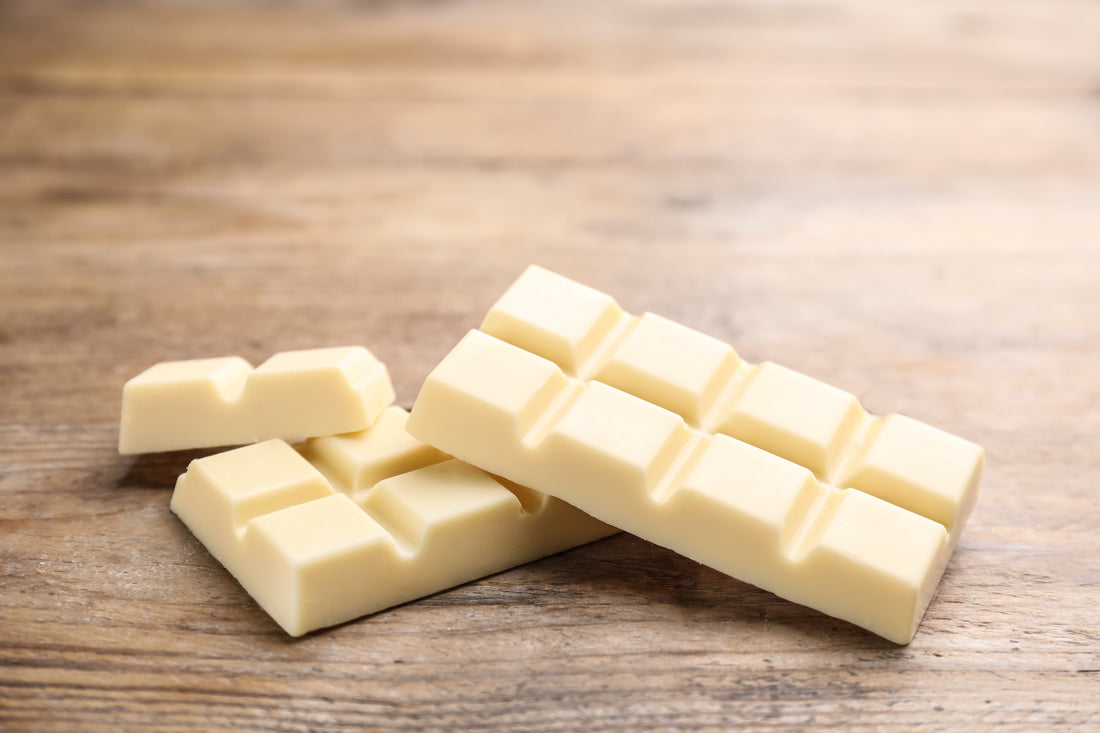
White chocolate is one of the most debated topics in the confectionery world - is it really chocolate? Here's a clear, authoritative answer along with everything you need to know about its ingredients, production, and uses.
What Is White Chocolate?
White chocolate is made from cocoa butter, milk solids, sugar, lecithin, and vanilla - but contains no cocoa solids (cocoa powder). This is why it's ivory-coloured rather than brown. Nestlé created and began selling it commercially in the 1930s. The U.S. FDA has specific standards for white chocolate labelling: a product must contain at least 20% cocoa butter, at least 14% milk solids, and no more than 55% sugar or other sweeteners to qualify as white chocolate.
Key White Chocolate Ingredients
Cocoa butter - the pure, natural fat extracted from cocoa beans; gives white chocolate its signature smooth, melt-in-your-mouth texture and subtle chocolate undertones. Milk solids - usually milk powder or condensed milk; provides the creamy, dairy-rich flavour and contributes to the characteristic ivory colour. Sugar - sweetens and texturises; premium white chocolate contains balanced sugar that doesn't overshadow the cocoa butter and milk. Lecithin - an emulsifier (usually soy-derived) that binds the cocoa butter with other ingredients for a smooth, uniform texture. Vanilla - adds depth and complexity to the flavour profile, complementing the creamy notes and balancing the sweetness.
How Does White Chocolate Differ from Milk and Dark Chocolate?
The key difference is the absence of cocoa solids in white chocolate. Cocoa solids (cocoa powder) give milk and dark chocolate their characteristic brown colour and chocolate flavour. Milk chocolate contains both cocoa solids and cocoa butter plus milk and sugar. Dark chocolate primarily consists of cocoa solids and cocoa butter with minimal sugar. White chocolate uses only the cocoa butter - none of the cocoa solids - combined with milk solids and sugar. This is why some argue it isn't "real" chocolate, while others (and the FDA) recognise it as a legitimate chocolate product because it contains cocoa butter from the cacao bean.
How Is White Chocolate Made?
Cocoa butter extraction - cacao beans are fermented, dried, roasted, then pressed to separate the butter from the solids; the extracted cocoa butter is filtered and refined. Ingredient mixing - refined cocoa butter is carefully combined with milk solids, sugar, lecithin, and vanilla in precise ratios and thoroughly blended. Conching - the mixture is heated and aerated in a conche machine for several hours; this develops flavour and creates the characteristically smooth texture. Tempering - careful heating and cooling to specific temperatures gives white chocolate its distinctive snap and appealing shine when solidified.
Common Ways to Use White Chocolate
White chocolate's creamy, sweet flavour profile makes it versatile in baking and confectionery: white chocolate chip cookies, white chocolate ganache and truffles, chocolate-covered strawberries, cheesecake flavouring, fudge, white chocolate bark with dried fruits and nuts, and as a drizzle decoration over darker desserts for visual contrast. Mrs. Fields White Chunk Macadamia cookies are a signature example of white chocolate's ability to pair beautifully with nutty, salty elements.
Explore what white chocolate is with clear explanations of its ingredients, production process, and uses in baking and confectionery.
Related ideas to explore next If you want to keep building on this topic, good next reads include Fun Facts About Chocolate, What Is Red Velvet and Why Is It Red, and 19 Unique Cookie Recipes. They are useful for comparing techniques, finding adjacent inspiration, or choosing a Mrs. Fields option that fits a different craving or occasion.
FAQ
1. Is white chocolate real chocolate?
Technically, white chocolate is considered a chocolate product by the FDA because it contains cocoa butter extracted from cacao beans. However, it contains no cocoa solids (the component that gives milk and dark chocolate their colour and characteristic chocolate flavour), which is why many chocolate purists argue it doesn't qualify. The debate ultimately comes down to how you define "chocolate" - by cocoa butter content alone, or by the presence of cocoa solids as well.
2. What does white chocolate taste like?
White chocolate has a creamy, sweet, rich flavour with notes of vanilla and dairy. It's noticeably sweeter and less complex than milk or dark chocolate, with none of the bitter or roasted notes associated with cocoa solids. The flavour profile is closer to sweet cream or caramel than to what most people think of as "chocolate flavour." High-quality white chocolate has a smooth melt-in-the-mouth texture and a more nuanced, less cloyingly sweet taste than lower-quality products.
3. What pairs well with white chocolate?
White chocolate pairs excellently with: macadamia nuts (the sweet-salty-creamy combination is one of the most beloved in baking), raspberries and other tart berries (the sweetness balances the acidity perfectly), citrus zest (lemon or orange), matcha (the earthy bitterness of matcha contrasts beautifully with white chocolate's sweetness), and dark chocolate (visual and flavour contrast). Mrs. Fields White Chunk Macadamia cookies are a perfect example of white chocolate's best pairing.