
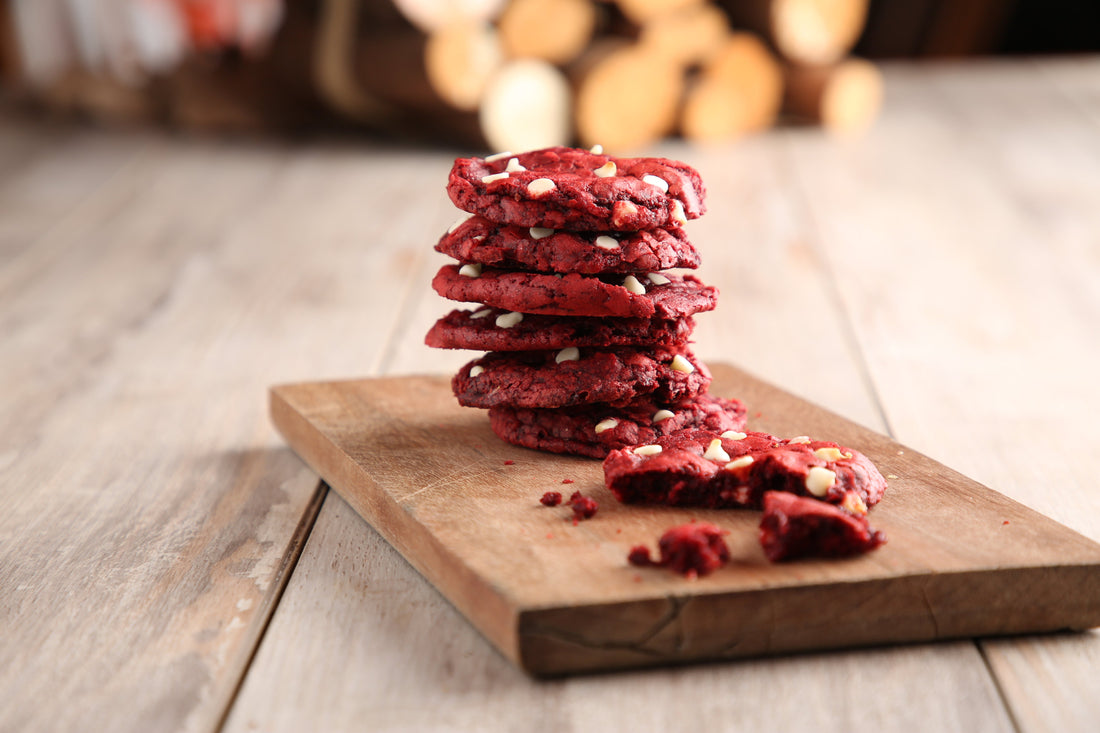
Red velvet cake is a classic and beloved dessert with a striking crimson hue and fluffy texture. This cake marries the subtle flavors of cocoa and vanilla with a vibrant appearance that makes it unmistakable.
What Is Red Velvet?
Red velvet is a flavor that's a mix of cocoa and vanilla, often available in baked cookies, cakes, and cupcakes. The most distinguishing feature is its vibrant red or deep maroon color. While it has a mild cocoa flavor, it's not as chocolatey as traditional chocolate cake - it balances both chocolate and vanilla flavors. A red velvet dessert is typically incomplete without its traditional accompaniment: rich, creamy, tangy cream cheese frosting that complements the subtle cocoa undertones perfectly.
Why Is Red Velvet Cake Red?
The distinctive red hue has both historical and modern explanations. Historically, the red color resulted from a chemical reaction: when acidic ingredients like buttermilk and vinegar combined with natural pigments (anthocyanins) in raw cocoa, they produced a natural reddish hue. Some early recipes also used beet juice to achieve the red color and increase moistness - an ingenious solution during times when artificial dyes weren't available. During the Great Depression, the Adams Extract Company began promoting its food dyes by offering a red velvet cake recipe with red food coloring to attract buyers, popularizing the vivid red version we know today. In modern red velvet cake, the iconic red hue primarily stems from this tradition of food coloring.
What Does Red Velvet Taste Like?
Red velvet has intrigued palates for generations, offering a taste that stands between vanilla and chocolate. It's distinctively different from both - lighter than pure chocolate with more complexity than plain vanilla, with a subtle tang from buttermilk and cream cheese frosting that gives it its signature flavour profile.
Red Velvet vs. Chocolate Cake
The key differences: red velvet uses significantly less cocoa powder than chocolate cake, has a distinctive bright red color, relies on buttermilk and vinegar for its characteristic subtle tang, and is traditionally paired with cream cheese frosting rather than chocolate ganache or buttercream. The texture of red velvet is also typically finer and more velvety than chocolate cake, thanks to the acidic ingredients interacting with the baking soda.
Explore what is red velvet and why it's red with useful context, practical details, and clear next steps you can apply right away.
Related ideas to explore next If you want to keep building on this topic, good next reads include Recipe Red Velvet Chocolate Chip Cookies, Best Frosting Recipes for Cakes and Cookies, and Chocolate Chip Cookies 101 Three Important Tips. They are useful for comparing techniques, finding adjacent inspiration, or choosing a Mrs. Fields option that fits a different craving or occasion.
FAQ
1. What flavor is red velvet?
Red velvet has a mild cocoa flavor balanced with vanilla, and a distinctive subtle tang from buttermilk and vinegar in the recipe. It's not as chocolatey as chocolate cake - it sits in a unique flavor category between vanilla and chocolate, made distinctive by the tangy cream cheese frosting that traditionally accompanies it.
2. Why is red velvet cake red?
Originally, the red color came from a natural chemical reaction between anthocyanins in raw cocoa and acidic ingredients like buttermilk and vinegar. Some early recipes also used beet juice. In modern red velvet, the vivid red color primarily comes from red food coloring, a tradition popularized during the Great Depression when the Adams Extract Company promoted their dyes using a red velvet cake recipe.
3. What is the difference between red velvet and chocolate cake?
Red velvet uses significantly less cocoa powder than chocolate cake, relies on buttermilk and vinegar for a subtle tang, has a distinctive bright red color, and is traditionally paired with cream cheese frosting rather than chocolate ganache. The texture is also typically finer and more velvety due to the acidic ingredients interacting with the baking soda in the recipe.