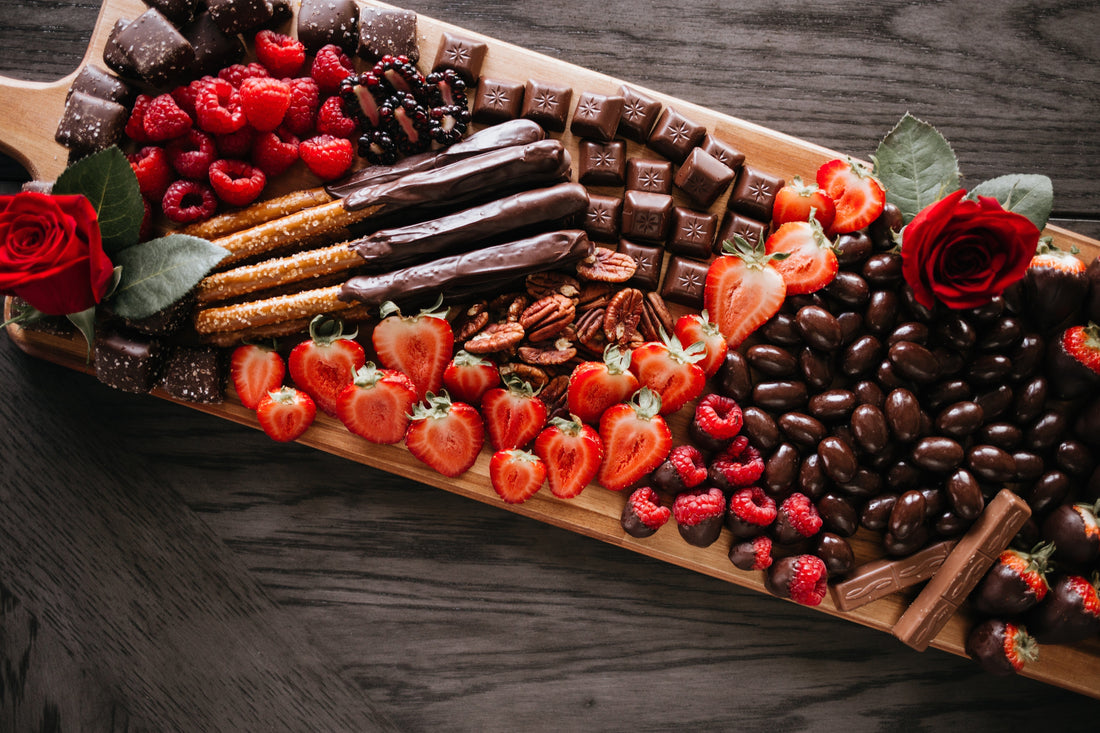
A dessert charcuterie board is a visually stunning spread of various sweet treats arranged on a serving board - the perfect centrepiece for any gathering. Unlike a plated dessert or a traditional cake, a sweet charcuterie board offers a diverse selection that lets everyone sample and enjoy different flavours and textures.
How to Make a Dessert Charcuterie Board
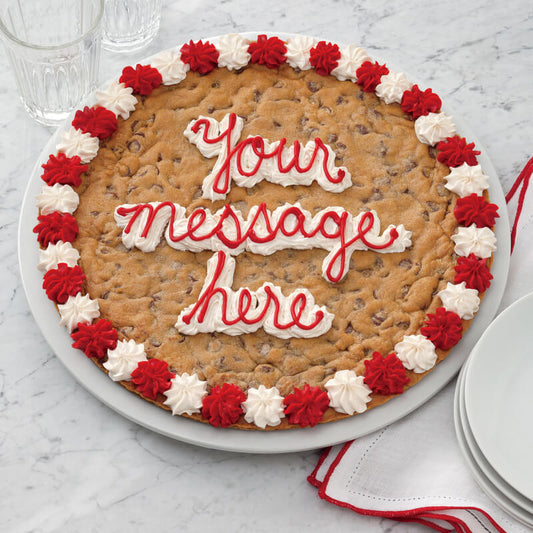
Step 1: Choose a theme (optional but adds cohesion). Ideas include: Mediterranean delight (baklava, figs, dates, honey-drizzled pastries), Death by chocolate (truffles, chocolate-covered pretzels, mini lava cake bites, chocolate-covered berries), Tropical paradise (mango, pineapple, coconut macaroons, mango tarts), Candy nostalgia (gummy worms, jelly beans, cake pops, cotton candy), Parisian bakery (éclairs, cream puffs, macarons, petit fours, artisanal chocolates), Galentine's Day (heart-shaped treats, sugar cookies with BFF iced on top, rose-shaped chocolates). Step 2: Select your board - wooden cutting boards, marble slabs, slate serving trays, or decorative ceramic plates all work well. Choose something large enough to accommodate all treats with room for decorative touches. Step 3: Pick your ingredients - fresh fruit (strawberries, grapes, pineapple, kiwi), dried fruit (apricots, figs, mango slices), sweets (candies, chocolates, cookies, pastries, macarons, brownies, bite-sized treats), dips and spreads (chocolate fudge, caramel sauce, whipped cream, fruit preserves), and crunchy extras (pretzels, biscotti, graham crackers). Mrs. Fields cookies and brownie bites are outstanding additions - premium quality, recognisable branding, and a variety of flavours that anchor any dessert board. Step 4: Assemble - place larger items like bowls of dips and clusters of fruit first to create focal points, then fill gaps with smaller sweets. Alternate colours, shapes, and textures to create visual interest. Step 5: Add finishing touches - fresh mint leaves, edible flowers, or a dusting of powdered sugar elevate the presentation considerably.
Tips for Creating a Sweet Charcuterie Board
Build outward from the centre rather than in rows - organic arrangements look more abundant and appealing. Use small bowls or ramekins for dips and loose items like M&Ms or trail mix to prevent spreading. Group similar colours together for visual impact, then add contrasting colours as accents. Scale the board to your guest count - a board that's too sparse looks underwhelming; too crowded looks messy. Assemble no more than 2 hours before serving to keep items fresh.
Explore how to make a dessert charcuterie board with tips, theme ideas, and practical assembly guidance.
Related ideas to explore next If you want to keep building on this topic, good next reads include 19 Types of Brownies, 24 Easy No-Bake Desserts, and 5 Cookie Exchange Ideas. They are useful for comparing techniques, finding adjacent inspiration, or choosing a Mrs. Fields option that fits a different craving or occasion.
FAQ
1. What should go on a dessert charcuterie board?
A great dessert charcuterie board includes a mix of textures and flavours: something fresh (fruit), something chewy (gummies, dried fruit, brownies), something crunchy (pretzels, biscotti, cookies), something creamy (dips, chocolate fondue, whipped cream), and something sweet and small (chocolates, candies, macarons). Mrs. Fields cookies and brownie bites anchor the board with premium quality and visual appeal.
2. How far in advance can you make a dessert charcuterie board?
Assemble no more than 2 hours before serving to keep everything fresh and visually appealing. You can prep all the components ahead of time (slice fruit, portion candies, arrange cookies), but keep them stored separately and assemble just before serving. If your board includes fresh fruit, add that last to prevent juice from leaking onto other items.
3. How much food do you need for a dessert charcuterie board?
For a dessert board as part of a larger meal, plan 3-5 bites of dessert per person. For a dessert board as the main event, plan 6-8 bites per person across all items. A board for 8-10 people typically needs 8-10 types of items with 2-3 pieces of each type. Scale up for larger gatherings or when dessert is the star of the show.