
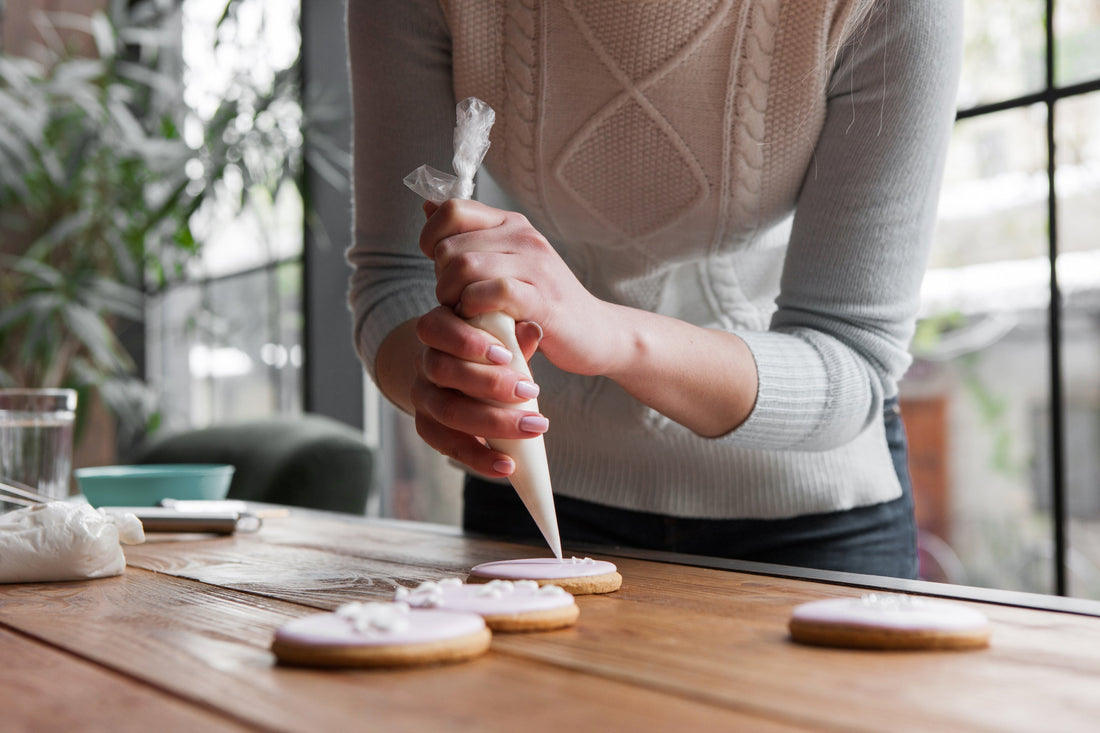
The art of cookie decorating is a universal delight, where every baked treat becomes your canvas for creativity. Whether you're a beginner or a seasoned baker, here's everything you need to know to decorate cookies beautifully.
Cookie Decorating Techniques
Royal icing - the go-to choice for cookie decorating at all skill levels. Use thick royal icing for outlines and thin (flooded) icing for filling in areas. Wet-on-wet icing method - layer wet icing on a freshly flooded base to create marbled effects or intricate patterns without advanced skills. Piping bags and tips - various tip sizes create different effects: round tips for outlines and writing, star tips for rosettes and borders, flat tips for ribbons and ruffles. Edible markers - excellent for fine details, writing, and line work directly on dried icing. Candy melts - melt and drizzle over cookies or use as paint with a brush for colourful designs.
Tips for Decorating Cookies
Start with completely cooled cookies - decorating warm cookies causes frosting to melt and slide. Consistency is key - thick icing for outlines, thin for flooding; this distinction produces professional-looking results. Get creative with colours - experiment with gel food colouring (not liquid) for vibrant, consistent results without affecting icing consistency. Master the piping bag - practice on parchment paper before committing to actual cookies. Patience is a virtue - allow each layer of icing to dry completely before adding more details. Embrace imperfections - each cookie is a unique creation; perfectionism is the enemy of enjoyment. Store decorated cookies in an airtight container to keep them fresh.
Creative Cookie Decorating Ideas
Sprinkle wonderland - classic sugar cookies with an assortment of colourful sprinkles; perfect for beginners. Lace-inspired elegance - intricate lace patterns using fine-tip piping; intermediate level. Edible watercolour - blend pastel edible paints across dried white icing for a whimsical, artistic finish. Dimensional royal icing - 3D designs that turn cookies into edible works of art; advanced technique. Occasion-themed designs - green shamrock icing for St. Patrick's Day, orange and purple for Halloween, pastels for Easter.
Cookie Decorating FAQs
What is the best way to decorate cookies? Royal icing, due to its versatility - begin with outlining, then flood with thinned icing for a smooth finish. How can I make my cookies look professional? Focus on icing consistency, use proper piping bags and tips, practice patience between layers, and experiment with colour. What can I use to practice cookie decorating? Parchment or wax paper - pipe and experiment with designs before moving to actual cookies.
Explore the ultimate guide to cookie decorating with tips, ideas, and practical details that make the art accessible at every skill level.
Related ideas to explore next If you want to keep building on this topic, good next reads include Gingerbread Cookie Decorating Ideas and Tips, 21 Halloween Cookie Ideas, and 30 Popular Christmas Cookie Ideas. They are useful for comparing techniques, finding adjacent inspiration, or choosing a Mrs. Fields option that fits a different craving or occasion.
FAQ
1. What is the best icing for decorating cookies?
Royal icing is the best choice for decorated cookies - it dries to a smooth, hard finish, is easy to colour with gel food dye, and works for both outlining and flooding. Make it thicker for outlines and add water a teaspoon at a time to thin it for flooding. Buttercream is softer and creamier but doesn't dry hard, making it better for immediate serving rather than detailed decorating.
2. How do you get smooth icing on cookies?
The flooding technique produces the smoothest results. Outline the cookie with thick royal icing first and let it set for 5-10 minutes. Then fill the inside with thinned flooding icing, using a toothpick to spread it into corners and pop any air bubbles. The icing will self-level as it dries - don't touch it. Allow to dry completely (2-4 hours minimum) before adding details on top.
3. How do you practice cookie decorating as a beginner?
Start by practicing on parchment paper - pipe lines, outlines, and shapes without the pressure of ruining actual cookies. Then progress to simple designs on plain sugar cookies: single-color floods, basic outlines, and sprinkle applications. Once comfortable, attempt the wet-on-wet marbling technique. Focus on icing consistency first - most beginner problems come from icing that's too thick or too thin.