
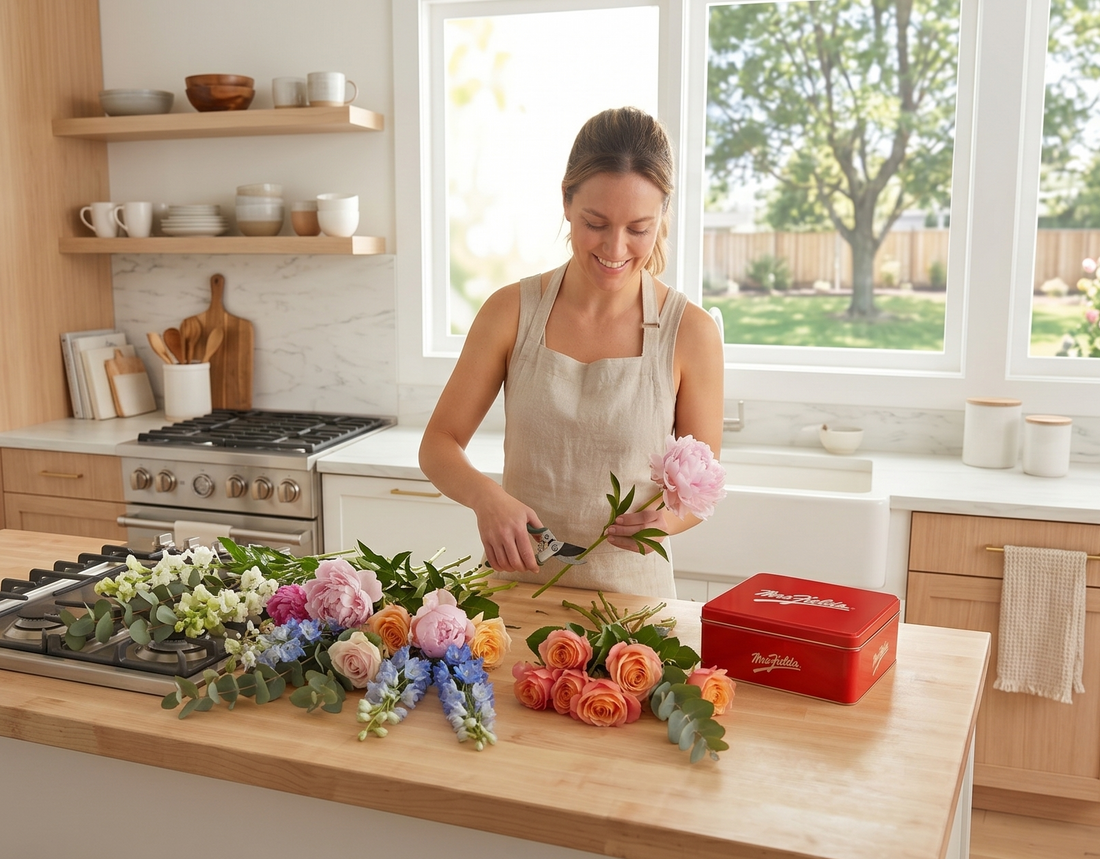
Making Cut Flowers Last Longer Cut flowers are one of the simplest ways to make a home feel considered and alive - and one of the things people most consistently feel they're getting wrong. Most premature wilting is preventable with a few straightforward techniques that make a real difference to vase life.
A Spoonful of Sugar (It Really Helps) The old tip about adding sugar to the vase water is entirely legitimate. Flowers continue to feed after cutting, drawing nutrients up through their stems. The standard ratio: one tablespoon of white granulated sugar per litre of vase water. For best results, combine the sugar with a small amount of acid - a tablespoon of white vinegar or a splash of lemon juice. The acid inhibits bacterial growth in the water. Together, sugar and acid create conditions close to what commercial flower food packets provide.
Cut the Stems Properly Cut at an angle (which maximises surface area for water absorption), and cut under running water or while the stem is submerged. Use sharp scissors or a clean knife rather than blunt scissors, which crush the stem. Recut stems every two to three days when you change the water.
Remove Leaves Below the Waterline Any leaves that sit below the water surface will rot within a day or two, dramatically accelerating bacterial growth. Strip every leaf from the lower half of each stem before placing flowers in a vase.
Location Matters Enormously
Flowers last longest in cool, indirect light away from sources of heat and ethylene gas. Don't place flowers near a fruit bowl (ripening fruit releases ethylene, which ages flowers rapidly), near a radiator or heating vent, or in direct sunlight. Some people place flower arrangements in the refrigerator overnight - this genuinely works, particularly for roses and tulips.
Reviving Wilted Flowers
A flower that's begun to droop isn't necessarily beyond saving. Recut the stem at an angle, then place the flower in lukewarm water up to its neck for 30-60 minutes. Lukewarm water moves up the stem more easily than cold.
Explore making cut flowers last longer with comparisons, practical details, and clear next steps you can apply right away.
The First Step That Matters Most
Start by setting up your vase, water, and tools before arranging. A few minutes of prep - adding sugar and acid to the water, having sharp scissors ready - makes the whole process smoother and gets the flowers into good conditions immediately.
Common Mistakes to Avoid
The biggest mistakes: not recutting stems, leaving leaves below the waterline, placing flowers near fruit or heat sources, and not changing the water regularly. Address all four and flower vase life will increase noticeably.
Related ideas to explore next If you want to keep building on this topic, good next reads include a Spoonful of Sugar and Other Fresh Flower Tips, Tips for Perfect Care Packages, and How to Gift Wrap Goodies. They are useful for comparing techniques, finding adjacent inspiration, or choosing a Mrs. Fields option that fits a different craving or occasion.
FAQ
1. What is the single most effective thing to keep cut flowers fresh longer?
Recutting the stems at an angle under water before placing in the vase, combined with clean water containing one tablespoon of sugar and a splash of white vinegar per litre. These two steps together make the biggest difference to vase life.
2. Why do flowers wilt so quickly?
The main culprits are bacterial growth in the water (which blocks stems and prevents water uptake), lack of nutrients, and ethylene exposure from nearby fruit. Changing water every two days, adding sugar and acid, removing submerged leaves, and keeping flowers away from fruit bowls addresses all of these.
3. Can you revive wilted flowers?
Yes. Recut the stem at an angle and place the flower in lukewarm water up to its neck for 30-60 minutes. Lukewarm water moves up the stem more readily than cold water. Many flowers that appear beyond saving will recover with this method.